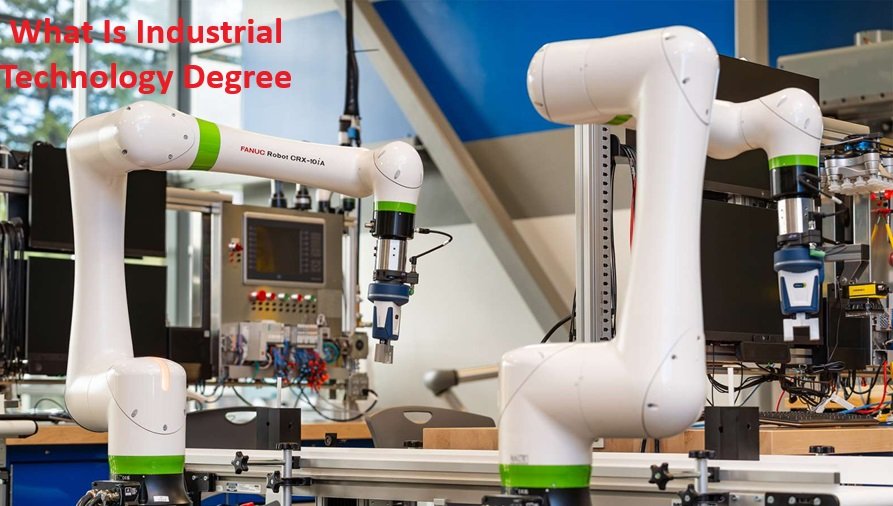
Introduction: What Is Industrial Technology Degree
A commercial corporation generation diploma is a specialized instructional software application that focuses on the application of engineering minds, technical abilities, and management practices in business and manufacturing environments. It bridges the distance between engineering ideas and actual worldwide commercial employer operations, equipping college students to participate in industries that include production, manufacturing, logistics, automation, and high-quality control. What Is Industrial Technology Degree.
What Does an Industrial Technology Degree Mean?
An industrial generation degree is designed to train college and university students in technical, managerial, and hassle-solving skills required in present-day industries. Unlike conventional engineering degrees that focus closely on precepts, this degree emphasizes the following:
- Practical applications
- Hands-on education
- Industry-relevant competencies
- Real-international trouble-solving
Students discover ways to:
- Improve production overall performance
- Manage employer systems
- Ensure excellent manipulation.
- Implement new era
Types of Industrial Technology Degrees
There are distinct degrees of enterprise era degrees available, counting on your career desires.
1. Associate Degree (Diploma Level)
- Duration: 2 years
- Focus: Basic technical and operational competencies
- Career roles: Technician, junior operator
2. Bachelor’s Degree
- Duration: three–four years
- Focus: Advanced commercial enterprise systems and control
- Career roles: Production supervisor, super analyst
3. Master’s Degree
- Duration: 1–2 years
- Focus: Leadership, studies, and specialization
- Career roles: Industrial manager, representative
4. Certifications
- Short-term publications in:
- Automation
- Supply chain
- Quality control
Subjects in Industrial Technology Degree
The curriculum combines engineering fundamentals with management and technical capabilities.
Core Subjects
| Subject | Description |
|---|---|
| Manufacturing Processes | Study of production techniques |
| Industrial Safety | Workplace safety practices |
| Quality Control | Ensuring product standards |
| Supply Chain Management | Managing logistics and distribution |
| Engineering Graphics | Technical drawing and design |
| Automation & Robotics | Modern industrial technologies |
| Project Management | Planning and executing projects |
| Materials Science | Study of industrial materials |
Skills Required for Industrial Technology Degree
To achieve this field, college students want a mixture of technical and soft skills.
Technical Skills
- Understanding device
- Knowledge of automation device
- Data assessment
- Process optimization
Soft Skills
- Problem-fixing
- Communication
- Leadership
- Time manipulation
Career Opportunities After Industrial Technology Degree
One of the biggest benefits of this diploma is the wide array of professional options.
Top Job Roles
| Job Role | Description | Average Salary (India) |
|---|---|---|
| Production Manager | Oversees manufacturing processes | ₹5–10 LPA |
| Quality Analyst | Ensures product quality | ₹4–8 LPA |
| Industrial Engineer | Improves efficiency | ₹6–12 LPA |
| Operations Manager | Manages daily operations | ₹6–15 LPA |
| Supply Chain Manager | Handles logistics | ₹7–14 LPA |
| Maintenance Engineer | Maintains machinery | ₹4–9 LPA |
Industries That Hire Industrial Technology Graduates
Graduates can paint in multiple sectors, which include:
- Manufacturing
- Automobile enterprise
- Construction
- Logistics and deliver chain
- Aerospace
- Electronics
- Energy zone
Salary After Industrial Technology Degree
Totally upon enjoyment, skills, and hobby position.
Salary Breakdown
| Experience Level | Average Salary |
|---|---|
| Fresher | ₹3–5 LPA |
| 2–5 Years | ₹5–10 LPA |
| 5–10 Years | ₹10–18 LPA |
| Senior Level | ₹18–30 LPA |
Advantages of Industrial Technology Degree
1. High Demand
Industries constantly want specialists who can beautify ordinary performance.
2. Diverse Career Options
You can paint in more than one industry.
3. Practical Knowledge
Focus on real-global packages.
4. Good Salary Growth
Strong income capability with experience.
Disadvantages of Industrial Technology Degree
1. Physically Demanding
Some roles require strolling in factories.
2. Continuous Learning Required
Technology adjustments frequently.
3. Shift Work
Industries may, moreover, require nighttime time shifts.
Industrial Technology vs Engineering
| Feature | Industrial Technology | Engineering |
|---|---|---|
| Focus | Application | Theory + Design |
| Learning | Practical | Theoretical |
| Career | Operations & Management | Design & Development |
| Difficulty | Moderate | High |
Best Countries to Study Industrial Technology
- USA
- Canada
- Germany
- Australia
- UK
These international locations offer advanced industrial schooling and higher-way opportunities.
Top Colleges for Industrial Technology
India
- IITs (associated fields)
- NITs
- State technical universities
Abroad
- Purdue University
- Texas A&M University
- University of Michigan
Future Scope of Industrial Technology Degree
The future can be very promising because of the following:
- Automation
- Artificial Intelligence
- Industry 4.0
- Smart production
Industries are transferring in the route of virtual transformation, growing the call for expert specialists.
Is an Industrial Technology Degree Worth It?
Yes, this diploma is truly well worth it in case you:
- Like practical artwork
- Enjoy trouble-shooting.
- Want a strong career
- Prefer business enterprise-primarily based roles
How to Choose the Right Industrial Technology Course
Consider the following factors:
- Accreditation
- Curriculum
- Internship possibilities
- Placement document
- Industry exposure
FAQs About Industrial Technology Degree
Q1: What is a commercial technology diploma?
A business corporation generation degree specializes in making use of engineering and technical talents to decorate business strategies and operations.
Q2: Is commercial organization technology a tremendous profession?
Yes, it offers robust pastime possibilities, precise income, and professional booms.
Q3: What jobs can I get with an industrial technology diploma?
You can do paintings as a manufacturing manager, fine analyst, operations supervisor, or commercial enterprise engineer.
Q4: What is the income after a commercial corporation generation degree?
Freshers earn around ₹3–5 LPA, at the same time as skilled professionals can earn ₹20+ LPA.
Q5: Is enterprise technology better than engineering?
It relies upon your hobby. The industrial era is extra practical, at the same time as engineering is extra theoretical.
Q6: What competencies are needed for business generation?
Technical facts, problem-fixing, communication, and management skills.
Q7: Can I certainly take a look at the industrial era after the 12th?
Yes, you could pursue a degree or bachelor’s diploma after finishing 12th.
Q8: What industries rent business-generation company graduates?
Manufacturing, logistics, car, introduction, and energy sectors.
Conclusion
A commercial era degree is an effective profession alternative for college kids who want to combine technical information with actual international enterprise programs. It opens doors to numerous industries, offers robust earnings capacity, and prepares you for the destiny of clever production and automation.