Introduction to Passive Dehumidification in Industrial Environments
Humidity control is a critical requirement in modern industrial environments where air quality directly affects system stability and operational efficiency. Passive dehumidification is an advanced approach that manages moisture without relying on high energy consumption systems. It works on the principle of continuous moisture regulation through specially designed components that operate with minimal mechanical input. The system focuses on maintaining stable humidity levels while reducing energy waste.
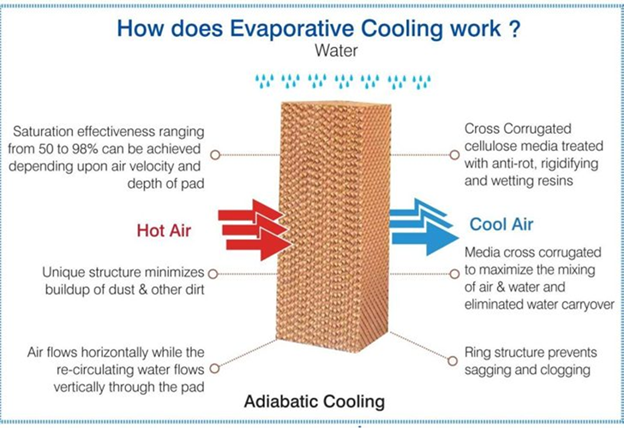
A key technology in this process is the evaporative cooling pad, which is often used in air treatment systems to support temperature and moisture balance. These pads help in pre-conditioning air before it enters advanced dehumidification units. Passive systems are increasingly preferred in industrial setups because they reduce operational complexity. They also support long-term efficiency by minimizing energy-driven humidity control methods.
How Passive Dehumidification Systems Work
Passive dehumidification systems operate on natural physical processes rather than energy-intensive mechanical compression. They rely on moisture adsorption and controlled airflow to regulate humidity levels. The system continuously removes excess moisture from the air using specialized materials that absorb water vapor. This process ensures consistent air quality without fluctuations caused by active mechanical cycles.
A major advantage of this system is its ability to function without heavy energy input. Unlike traditional systems that require compressors, passive systems maintain continuous performance using airflow dynamics. This makes them highly suitable for environments where energy efficiency is a priority.
Key operating principles include:
- Continuous moisture absorption through desiccant materials
- Airflow-driven humidity regulation
- No compressor or refrigeration cycle required
- Stable and uninterrupted dehumidification process
- Low maintenance operation with fewer mechanical parts
These principles allow passive systems to maintain consistent humidity levels while reducing operational costs.
Role of Heat Recovery and Energy Optimization Systems
Modern industrial air systems often combine dehumidification with energy recovery technologies to improve efficiency. Heat recovery systems play a crucial role in reducing energy waste by capturing and reusing thermal energy from air streams. Technologies such as heat recovery wheels for paint booths help optimize airflow conditions while reducing energy consumption.
These systems support passive dehumidification by stabilizing air temperature and reducing moisture load before air enters humidity control units. This improves overall system performance and ensures smoother operation. The integration of energy recovery systems also reduces stress on air handling equipment.
Benefits of heat recovery integration include:
- Reduced energy consumption in HVAC systems
- Improved thermal balance across air streams
- Lower operational load on dehumidification units
- Enhanced system efficiency in continuous operations
- Better environmental sustainability
This combination of technologies creates a more efficient and balanced air management system.
Core Technology Behind Passive Dehumidification Systems
At the center of passive dehumidification technology is the desiccant-based system. These systems use moisture-absorbing materials that capture water vapor from the air. The materials are structured in a way that allows continuous adsorption and regeneration. This ensures that moisture control is maintained without interruption.
A key component in this process is the rotating desiccant system, which continuously exposes fresh material to incoming air. This ensures consistent moisture removal and stable humidity control. The system is designed to operate efficiently with minimal energy input.
Core components include:
- Desiccant wheel for moisture absorption
- Airflow channels for controlled circulation
- Regeneration zones for moisture release
- Structural housing for system stability
- Integration modules for HVAC compatibility
These components work together to maintain a controlled and balanced air environment.
Industrial Applications of Passive Dehumidification
Passive dehumidification systems are widely used in industries where humidity control is essential for maintaining operational stability. These systems provide continuous moisture regulation without requiring high energy consumption. They are especially useful in environments where air quality consistency is critical.
In many industrial setups, these systems are integrated with heat recovery rotors for paint shops to improve overall energy efficiency and air quality management. This integration helps maintain stable environmental conditions while reducing operational costs.
Common application areas include:
- Manufacturing environments requiring controlled humidity
- Storage systems needing moisture protection
- HVAC systems requiring air stabilization
- Industrial air treatment units with continuous airflow
- Energy-efficient ventilation systems
Key operational advantages in applications:
- Stable humidity control in enclosed environments
- Reduced risk of moisture-related damage
- Improved air system reliability
- Continuous operation without energy spikes
- Enhanced system durability
These benefits make passive dehumidification suitable for a wide range of industrial applications.
Passive Dehumidification vs Traditional Systems
Passive dehumidification systems offer a significant advantage over traditional active systems in terms of energy efficiency and operational simplicity. Traditional systems rely on compressors and refrigeration cycles, which consume high amounts of energy. Passive systems eliminate this requirement by using natural adsorption processes.
Key differences include:
- Passive systems operate without compressors
- Lower energy consumption compared to active systems
- Continuous operation without cycling delays
- Reduced mechanical wear and tear
- Simplified maintenance requirements
Performance comparison highlights:
- Stable humidity control without fluctuations
- Lower operational costs over time
- Improved long-term system reliability
- Better integration with HVAC systems
- Reduced environmental impact
These differences make passive systems a more sustainable choice for industrial moisture control.
System Design and Integration Considerations
Proper system design is essential for maximizing the efficiency of passive dehumidification systems. Factors such as airflow volume, humidity levels, and system size must be carefully evaluated. Incorrect design can reduce efficiency and impact performance consistency.
System integration with existing HVAC infrastructure is also important. Proper alignment ensures smooth airflow and balanced humidity control. This helps maintain system stability and improves overall efficiency.

Important design considerations include:
- Airflow rate and distribution
- Moisture load in the environment
- Compatibility with HVAC systems
- Desiccant wheel sizing and capacity
- Regeneration efficiency
Proper planning ensures long-term system stability and reliable performance.
Professional Support and System Consultation
Industrial dehumidification systems require expert evaluation to ensure proper selection and integration. Professional consultation helps in identifying the most efficient configuration based on operational needs. It also ensures that the system is optimized for long-term performance and energy efficiency.
For technical assistance and system inquiries, you can contact Desiccant Rotors International for expert support. Professional guidance ensures that system design aligns with industrial requirements and operational goals.
Conclusion
Passive dehumidification systems represent an advanced approach to industrial moisture control. They provide consistent humidity regulation without relying on energy-intensive mechanical systems. Their ability to operate continuously with minimal energy consumption makes them highly efficient and sustainable. When combined with modern energy recovery technologies, these systems offer even greater performance benefits.
Their integration into industrial air systems supports improved efficiency, reduced costs, and better environmental control. Passive dehumidification is becoming an essential part of modern HVAC strategies focused on sustainability and operational stability.
Frequently Asked Questions (FAQs)
1. What is passive dehumidification?
Passive dehumidification is a moisture control method that uses natural adsorption processes instead of energy-intensive mechanical systems.
2. How does a passive dehumidification system work?
It works by using desiccant materials that absorb moisture from the air through continuous airflow and controlled regeneration.
3. What are the benefits of passive dehumidification systems?
They offer low energy consumption, continuous operation, reduced maintenance, and stable humidity control.
4. Can passive systems replace traditional dehumidifiers?
Yes, in many industrial applications they can replace active systems, especially where energy efficiency is a priority.
5. Where are passive dehumidification systems commonly used?
They are used in manufacturing, storage facilities, HVAC systems, and industrial air treatment environments.