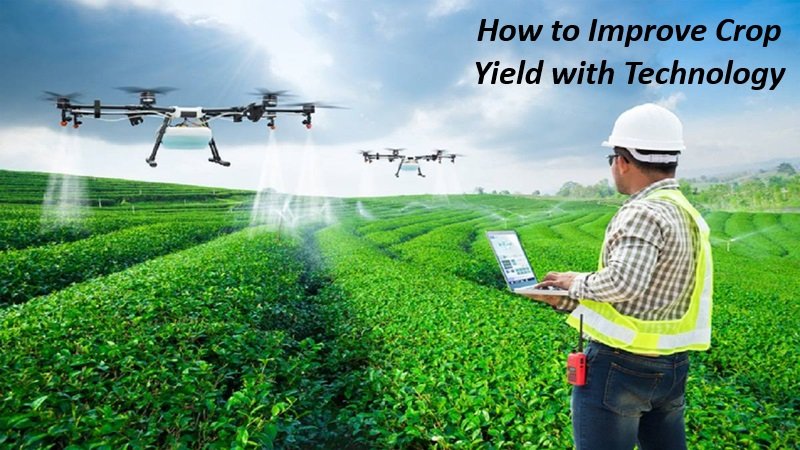
Introduction: How to Improve Crop Yield with Technology
Agriculture has constantly been the spine of human civilization; however, in today’s fast-converting international world, conventional farming techniques on their own are no longer sufficient to meet the growing meal name. With developing population strain, weather alternatives, soil degradation, and restrained natural resources, farmers ought to undertake cutting-edge answers to maximize productivity. This is wherein generation plays a vital function. How to Improve Crop Yield with Technology.
Improving crop yield with ERA isn’t actually a choice—it is a want. From smart irrigation systems to synthetic intelligence, modern-day enhancements are reworking agriculture proper right into a greater green, sustainable, and profitable area. By integrating superior gadgets and techniques, farmers must make better picks, reduce waste, and appreciably beautify production.
This entire guide will provide a reason behind a way to decorate crop yield with era, masking every crucial element in the element, such as gadget, strategies, advantages, and sensible implementation.
What is Crop Yield and Why It Matters
Understanding Crop Yield
Crop yield refers to the amount of agricultural output produced in keeping with a unit of land vicinity, commonly measured in lots in step with a hectare or kilograms constant with an acre. It is a key indicator of farm productivity and overall performance.
Importance of High Crop Yield
- Ensures meals protection
- Increases farmer profits
- Optimizes land use
- Supports monetary boom
- Reduces dependency on imports
Higher yield manner, higher profitability, and sustainability for farmers.
Role of Technology in Modern Agriculture
Technology is revolutionizing agriculture with the useful resource of making farming extra record-pushed, precise, and efficient.
Key Benefits of Using Technology in Farming
- Accurate desire-making
- Efficient resource control
- Reduced hard work costs
- Minimized environmental impact
- Improved crop incredible and quantity
Types of Technologies Used to Improve Crop Yield
1. Precision Agriculture
Precision agriculture entails the usage of statistics, sensors, and GPS era to manipulate flowers extra as they need to be.
Key Features:
- Soil mapping
- Crop tracking
- Variable price software program
Benefit: Reduces enter fees at the same time as maximizing output.
2. Smart Irrigation Systems
Water is one of the most important belongings in farming. Smart irrigation structures ensure pinnacle-rated water utilization.
Technologies Used:
- Drip irrigation
- Automated sprinklers
- Soil moisture sensors
Benefit: Prevents overwatering and improves plant fitness.
3. Drones in Agriculture
Drones are more and more used for tracking flora and spraying fertilizers or insecticides.
Applications:
- Aerial imaging
- Crop fitness evaluation
- Pest detection
Benefit: Saves time and provides real-time insights.
4. Artificial Intelligence (AI)
AI allows farmers to analyze large portions of statistics to make better choices.
Uses:
- Predicting weather styles
- Identifying sicknesses
- Yield forecasting
Benefit: Improves accuracy and decreases dangers.
5. Internet of Things (IoT)
IoT connects devices and sensors to accumulate real-time facts from the sector.
Examples:
- Smart soil sensors
- Weather stations
- Livestock tracking systems
Benefit: Enables actual-time tracking and short decision-making.
6. Biotechnology and Improved Seeds
Genetically advanced seeds can significantly boost yield.
Advantages:
- Disease resistance
- Drought tolerance
- Higher productivity
Important Technologies and Their Impact (Table)
| Technology | Purpose | Benefit | Impact on Yield |
|---|---|---|---|
| Precision Agriculture | Data-based farming | Efficient input use | High |
| Smart Irrigation | Water management | Saves water, boosts growth | High |
| Drones | Monitoring & spraying | Faster operations | Medium |
| AI & Machine Learning | Decision support | Predictive insights | High |
| IoT Devices | Real-time data collection | Better farm management | High |
| Improved Seeds | Enhanced crop genetics | Higher resistance & output | Very High |
Step-by-step with the aid of way of the Step Guide to Improve Crop Yield Using Technology
Step 1: Soil Testing and Analysis
Before planting, farmers must conduct soil tests, finding out the usage of digital systems.
Why It Matters:
- Identifies nutrient deficiencies
- Helps pick the right fertilizers
Step 2: Use High-Quality Seeds
Investing in certified and superior seeds ensures a higher increase and resistance.
Step 3: Implement Smart Irrigation
Use drip irrigation or computerized systems to provide the right amount of water.
Step 4: Monitor Crops with Drones and Sensors
Regular tracking enables finding out:
- Diseases
- Pest assaults
- Nutrient deficiencies
Step 5: Apply Fertilizers Precisely
Use a precision farming device to apply fertilizers most effectively where needed.
Step 6: Use AI-Based Farm Management Software
These devices assist in:
- Crop planning
- Weather prediction
- Risk control
Step 7: Harvest at the Right Time
Technology can help decide the ultimate harvesting time, enhancing yield and quality.
Advantages of Technology in Crop Production
1. Increased Productivity
Technology guarantees most output from confined resources.
2. Cost Efficiency
Reduces useless fees on water, fertilizers, and labor.
3. Better Crop Quality
Improves size, taste, and dietary price.
4. Sustainability
Minimizes environmental damage.
Challenges in Adopting Technology
Despite its blessings, there are some worrying conditions:
1. High Initial Cost
Advanced tools may be costly.
2. Lack of Awareness
Many farmers are unaware of modern-day equipment.
3. Technical Knowledge
Requires education and competencies.
4. Connectivity Issues
Internet access is restrained in rural areas.
Solutions to Overcome Challenges
- Government subsidies and schemes
- Training programs for farmers
- Affordable generation answers
- Improved rural internet connectivity
Future of Farming with Technology
The destiny of agriculture is smart, digital, and sustainable.
Emerging Trends:
- Robotics in farming
- Blockchain for supply chains
- Climate-clever agriculture
- Vertical farming
Technology will continue to transform agriculture, making it greener and more resilient.
Tips for Farmers to Maximize Yield
- Adopt contemporary system progressively
- Stay updated with new generation
- Use facts-pushed choice-making
- Focus on soil fitness
- Avoid overuse of chemical substances
Conclusion
Improving crop yield with ERA is the key to sustainable and worthwhile farming within contemporary technology. By adopting tools like precision agriculture, smart irrigation, AI, drones, and IoT, farmers can extensively increase productivity at the same time as reducing expenses and environmental effects.
Although there are disturbing conditions in adopting those eras, the long-term advantages far outweigh the preliminary funding. With the right schooling, government manual, and recognition, farmers can successfully transition to smart farming practices.
In the approaching years, the era will now not simply help agriculture—it will define it. Farmers who encompass innovation nowadays will lead the future of farming.
FAQs
1. What is the top-notch generation to beautify crop yield?
Precision agriculture and clever irrigation systems are some of the first class of the era.
2. How does AI assist in farming?
AI allows predicting weather, detecting illnesses, and optimizing farming practices.
3. Are those generations cheaper for small farmers?
Yes, many governments provide subsidies, and espresso-fee answers are becoming available.
4. Can technology lessen farming fees?
Yes, it reduces waste and improves performance, which is crucial to decreasing commonplace expenses.
5. Is generation vital for current farming?
Absolutely. It is important for developing productiveness and ensuring sustainability.