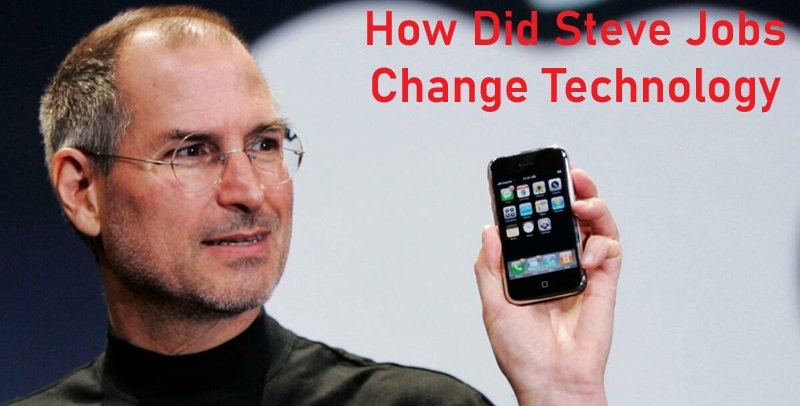
Introduction: How Did Steve Jobs Change Technology
Technology nowadays seems hugely unique from what it came to be in advance of the upward push of Steve Jobs. From the manner we use smartphones to how we are aware of tunes, they have an effect on us anywhere. He didn’t just construct merchandise—he reshaped entire industries and changed how people engage with the era on a day-to-day foundation. How Did Steve Jobs Change Technology
This article explores intensively how Steve Jobs revolutionized a generation that specializes in his upgrades, philosophy, and prolonged-lasting legacy.
Early Vision of Steve Jobs
Steve Jobs changed into no longer only a businessman—he became a visionary who believed generations ought to be easy, elegant, and available to absolutely truly everybody. When he co-founded Apple Inc. In 1976 with Steve Wozniak, the purpose ended up smooth: deliver computers into normal lifestyles.
At that time, laptop structures had been big, complex machines used in a particular manner by professionals. Jobs imagined a destiny in which each domestic might have a personal PC. How Did Steve Jobs Change Technology
Revolutionizing Personal Computing
The Apple II and Early Success
The creation of the Apple II turned out to be a turning element. It was one of the first fully produced non-public computer systems.
Key contributions:
- Easy-to-use interface
- Color photos guide
- Targeted regular consumers
This product helped install the private computing corporation.
The Macintosh and Graphical User Interface
In 1984, Apple released the Apple Macintosh, which changed computing all the time.
Key Innovations:
- Graphical User Interface (GUI)
- Mouse-based navigation
- User-high-quality layout
Instead of typing instructions, users should click icons—a few issues we now take as a right.
The Return of Steve Jobs and Apple’s Reinvention
After leaving Apple in 1985, Jobs returned again in 1997 while the business enterprise was suffering.
His comeback marked a modern-day generation of innovation:
- Simplified product line
- Focus on format and client level
- Introduction of groundbreaking products
Transforming the Music Industry
The iPod Revolution
In 2001, Apple introduced the iPod.
Before the iPod:
- Music gamers had limited gear
- Poor character experience
After the iPod:
- Thousands of songs on your pocket
- Simple scroll-wheel interface
Tunes and Digital Music
Jobs, furthermore, released iTunes, which changed how songs were modified and allocated.
Impact:
- Legal digital downloads
- Affordable track purchases
- End of CD dominance
This reshaped the global track enterprise.
Reinventing the Smartphone
The Launch of the iPhone
In 2007, Apple added the iPhone, one of the most essential technological enhancements of the 21st century.
What Made It Revolutionary?
- Touchscreen interface
- No bodily keyboard
- Internet browsing functionality
- App surroundings
Before the iPhone, smartphones had been complicated. Jobs made them easy and intuitive.
App Store Ecosystem
The release of the App Store created a current-day virtual financial gadget.
Benefits:
- Developers can also need to construct apps
- Users had countless opportunities
- Businesses reached global audiences
Changing the Computer Industry with MacBooks
Apple laptops, specifically the MacBook, introduced the following:
- Sleek layout
- Lightweight assembly
- High universal average overall performance
Jobs emphasized layout as much as capability, making devices now not simply devices but lifestyle products. How Did Steve Jobs Change Technology
The iPad and Tablet Revolution
In 2010, Apple released the iPad.
Key Features:
- Large touchscreen
- Portable computing
- Ideal for media intake
The iPad created a brand new category among smartphones and laptops.
Steve Jobs’ Design Philosophy
One of Jobs’ biggest contributions grew to be his method to lay out.
Core Principles:
- Simplicity
- Elegance
- Functionality
- User-first wondering
He believed:
“Design is not in reality what it seems like and seems like. Design is how it works.”
Integration of Hardware and Software
Unlike many competitors, Apple controlled all hardware and software.
Advantages:
- Better normal performance
- Seamless patron experience
- Strong environment
Devices like iPhone, iPad, and Mac work together easily.
Marketing Genius
Jobs modified into, additionally, a draw near marketer.
Famous Launch Strategy:
- Dramatic presentations
- Clear messaging
- Focus on benefits, no longer specs
His product launches have come to be global sports.
Impact on Animation and Entertainment
Jobs, moreover, performed a prime role in animation through Pixar Animation Studios.
Achievements:
- Produced movies like Toy Story
- Revolutionized computer animation
Pixar modified how lively films had been made and consumed.
Important Contributions Summary (Table)
| Area | Contribution | Impact |
|---|---|---|
| Personal Computing | Macintosh | GUI revolution |
| Music | iPod + iTunes | Digital music era |
| Smartphones | iPhone | Mobile computing revolution |
| Tablets | iPad | New device category |
| Design | Minimalist approach | Industry standard |
| Ecosystem | Apple integration | Seamless experience |
| Animation | Pixar | CGI film revolution |
Steve Jobs vs Competitors
Jobs stood out due to the fact he targeted enjoyment, no longer absolutely generation.
Comparison:
| Feature | Apple Approach | Others |
|---|---|---|
| Design | Premium & minimal | Functional |
| Software | Controlled ecosystem | Open systems |
| Innovation | Bold & disruptive | Incremental |
| Marketing | Emotional storytelling | Technical focus |
Leadership Style of Steve Jobs
Jobs modified into recognized for being
- Perfectionist
- Demanding
- Vision-driven
While controversial, his management pushed organizations to benefit excellence.
Challenges and Criticism
Despite his fulfillment, Jobs confronted criticism:
- Strict manipulation over Apple surroundings
- High product pricing
- Intense manage fashion
However, those picks regularly contributed to Apple’s fulfillment.
Long-Term Impact on Technology
Steve Jobs’ impact continues in recent times:
Modern Innovations Inspired via Him:
- Touchscreen smartphones
- App-primarily based ecosystems
- Minimalist product format
- Focus on consumer experience
Lessons from Steve Jobs
Key Takeaways:
- Focus on simplicity
- Think in a different manner
- Combine paintings and generation
- Prioritize man or woman’s enjoyment
- Take risks
FAQs
Why is Steve Jobs essential in technology?
He revolutionized more than one industry, inclusive of computing, song, and smartphones.
What changed into Steve Jobs’ biggest invention?
The iPhone takes into consideration his maximum impactful innovation.
How did Steve Jobs affect present-day technology?
He brought person-incredible layout, contact interfaces, and included ecosystems.
What organizations did Steve Jobs have an impact on?
Primarily Apple, however, also Pixar and the global tech business enterprise.
Conclusion
Steve Jobs didn’t simply trade generations—he redefined how humans interact with them. Through merchandise just like the iPhone, iPod, and Macintosh, he made the era intuitive, fashionable, and crucial.