Introduction: What Does IT Stand for in Technology
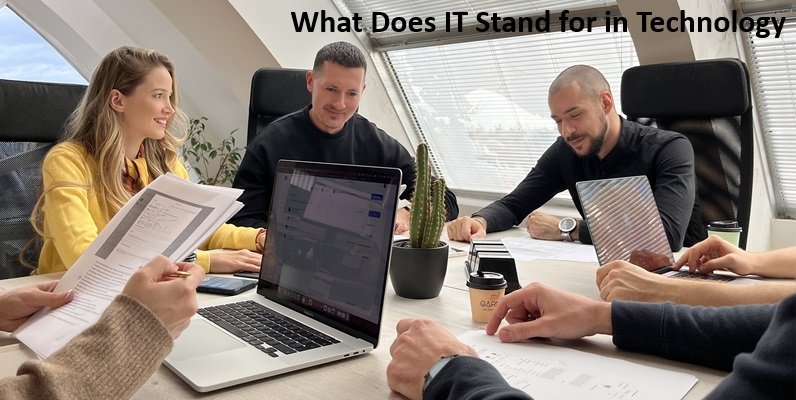
In these days’ virtual age, the term “IT” is everywhere—from places of work and schools to smartphones and international companies. But many human beings, though, ask, “What does IT stand for in technology?”
The answer is straightforward, however powerful:
IT stands for “information technology.”
However, this quick form consists of a terrabyte, which means it impacts nearly every detail of contemporary-day life. In this specific manual, we can discover the whole lot about IT—its meanings, additives, makes use of, blessings, careers, and destiny scope.
What is Information Technology (IT)?
Definition of IT
What Does IT Stand for in Technology? It refers to using computer systems, software program application software, networks, and digital systems to keep, access, manage, and change records.
In simple phrases:
IT permits in handling data the use of era.
Basic Explanation
Whenever you:
- Use a smartphone
- Send emails
- Browse the internet
- Store documents on a computer
You are the usage of information technology.
Full Form of IT in Technology
| Short Form | Full Form | Meaning |
|---|---|---|
| IT | Information Technology | Technology used to manage and process information |
History of Information Technology
Early Days
- It commenced with easy gadgets like abacuses and early calculating machines.
- Later, mechanical computer systems were superior.
Modern Development
- twentieth century observed the upward thrust of digital computers
- The invention of the internet revolutionized IT
Current Era
- Cloud computing
- Artificial Intelligence
- Cybersecurity
- Big Data
Main Components of IT
Information technology isn’t certainly computer structures—it includes a couple of elements running together.
1. Hardware
Physical gadgets, which include
- Computers
- Servers
- Hard drives
- Networking devices
2. Software
Programs that run on hardware:
- Operating systems
- Applications
- Tools
3. Networking
Connecting structures together:
- Internet
- LAN/WAN
- Wireless conversation
4. Data
The maximum vital element:
- Text
- Images
- Videos
- Databases
5. People
IT professionals who manipulate structures:
- Developers
- Engineers
- Analysts
Types of IT Systems
1. Management Information Systems (MIS)
Used for choice-making in companies.
2. Transaction Processing Systems (TPS)
Handles each day’s operations, like billing.
3. Decision Support Systems (DSS)
Helps in complicated trouble-solving.
4. Enterprise Resource Planning (ERP)
Integrates all industrial employer techniques.
Uses of IT in Daily Life
1. Communication
- Emails
- Messaging apps
- Video calls
2. Education
- Online education
- E-analyzing systems
3. Business
- Data management
- Online transactions
4. Healthcare
- Digital data
- Online consultations
5. Entertainment
- Streaming
- Gaming
- Social media
Importance of IT in Modern World
1. Faster Communication
Information can be shared right now the world over.
2. Data Storage
Huge portions of information can be stored correctly.
3. Automation
Reduces guide paintings and could increase overall performance.
4. Global Connectivity
Connects corporations and those worldwide.
5. Economic Growth
IT drives innovation and manner creation.
Advantages of Information Technology
| Advantage | Explanation |
|---|---|
| Speed | Quick data processing |
| Accuracy | Reduces human errors |
| Efficiency | Saves time and effort |
| Storage | Large data capacity |
| Accessibility | Easy access to information |
Disadvantages of IT
| Disadvantage | Explanation |
|---|---|
| Cybercrime | Hacking and data theft |
| Job Loss | Automation reduces some jobs |
| Dependency | Over-reliance on technology |
| Privacy Issues | Data misuse risks |
IT in Different Industries
1. Banking
- Online banking
- Digital payments
2. Education
- Smart classrooms
- Online getting to know
3. Healthcare
- Telemedicine
- Patient records
4. Retail
- E-alternate
- Inventory management
5. Government
- E-governance
- Digital offerings
Careers in Information Technology
IT gives some of the maximum in-call for careers these days.
Popular IT Jobs
| Job Role | Description |
|---|---|
| Software Developer | Builds applications |
| Network Engineer | Manages networks |
| Data Analyst | Analyzes data |
| Cybersecurity Expert | Protects systems |
| IT Support Specialist | Solves technical issues |
Skills Required in IT
- Programming (Python, Java, C++)
- Problem-fixing
- Communication
- Networking know-how
- Cybersecurity basics
Future of IT
The destiny of IT is rather promising.
Emerging Technologies
1. Artificial Intelligence (AI)
Machines that are expected and taken a look at.
2. Cloud Computing
Storing records online in place of physical garage.
3. Internet of Things (IoT)
Connected clever devices.
4. Blockchain
Secure digital transactions.
5. Cybersecurity
Protection toward digital threats.
Difference Between IT and Computer Science
| Feature | IT | Computer Science |
|---|---|---|
| Focus | Application of technology | Theory and algorithms |
| Work | Managing systems | Creating new technologies |
| Careers | Support, networking | Development, research |
Why IT is Important for Students
- Enhances virtual competencies
- Improves hobby possibilities
- Helps in studying cutting-edge device
- Prepares for destiny careers
How to Start a Career in IT
Step-with the aid of-Step Guide
- Learn fundamental pc skills
- Choose a specialization
- Learn programming languages
- Take online courses
- Build obligations
- Apply for internships
Common Misconceptions About IT
Myth 1: IT is best about coding
Reality: IT consists of networking, help, security, and extra.
Myth 2: IT jobs are smooth
Reality: They require regular learning.
Myth 3: Only engineers can art work in IT
Reality: Anyone can study IT skills.
Conclusion
So, what does “IT” stand for in generation?
IT stands for Information Technology, a region that powers the current-day digital world.
From verbal exchange to healthcare, from education to enterprise, IT plays a crucial position in shaping our daily lives. With fast advancements in generation, the significance of IT will awesome hold developing.
Whether you are a student, professional, or commercial organization owner, IT is vital in recent times worldwide.
FAQs – What Does IT Stand for in Technology
1. What is the whole shape of IT?
IT stands for “information technology.”
2. What is IT used for?
IT is used to hold, methodize, and control records of the usage of laptop structures and software programs.
3. Is IT an exquisite profession alternative?
Yes, IT gives excessive-paying jobs, boom opportunities, and international calls.
4. What abilities are preferred for IT jobs?
Programming, networking, problem-fixing, and communication abilities.
5. What is the distinction between IT and ICT?
- IT: Focuses on generation and statistics
- ICT: Includes conversation generation like telecom
6. Can beginners have a look at IT effortlessly?
Yes, with the right guidance and practice, every person can observe IT.
7. What are examples of IT?
- Computers
- Internet
- Software applications
- Cloud garage
8. What is the future of IT?
The future consists of AI, automation, cybersecurity, and cloud computing.