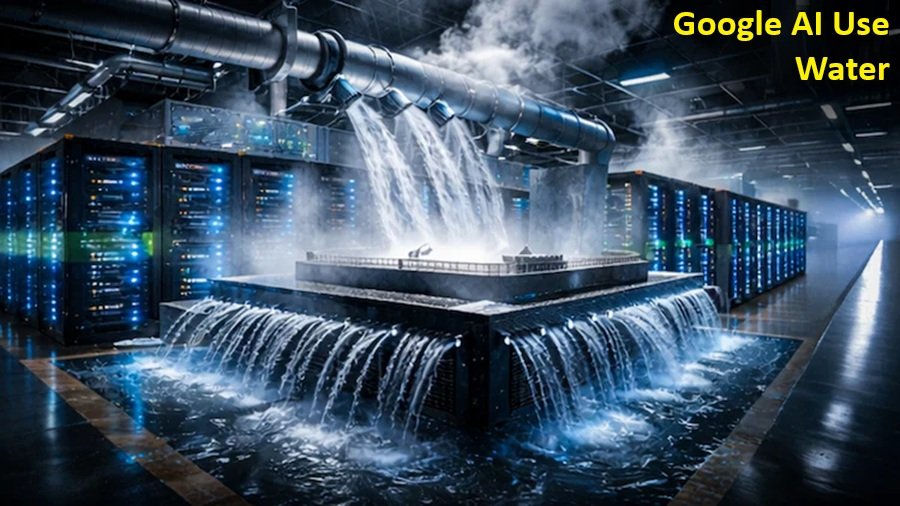
Introduction: Does Google AI Use Water
Artificial intelligence has become a critical part of normal lifestyles. Millions of people use Google’s AI-powered services to look for information, write content material, generate thoughts, translate languages, and resolve issues. Tools including Google Gemini and AI-powered Google Search make many responsibilities quicker and less hard. However, as synthetic intelligence continues to amplify, humans are getting extra interested in its environmental impact. Does Google AI Use Water.
One commonplace question is: Does Google AI use water?
The quick answer is effective. Google AI makes use of water in a roundabout way through the records facilities and laptop systems that carry out synthetic intelligence offerings. These centers include powerful pc structures that generate heat at the same time as processing statistics. Water may be used to assist cool this tool and keep steady working temperatures.
However, the quantity of water used relies upon several elements, alongside the statistics center’s cooling technology, place, weather situations, strength supply, and the form of computing workload.
Understanding how Google AI uses water is essential because of the fact water is a valuable herbal resource. As AI technology will become more well-known, corporations ought to discover strategies to characterize their systems successfully at the same time as lowering their environmental impact.
This article explains how Google AI makes use of water, why information facilities want cooling, how AI affects the surroundings, and what Google is doing to decorate sustainability.
1. What Is Google AI?
Google AI refers to synthetic intelligence technology superior and utilized by Google. These technologies permit computer structures to recognize language, recognize snap shots, manner records, generate responses, and carry out complex obligations.
Google uses AI at some stage in numerous services and products, which incorporates:
- Google Gemini
- Google Search
- Google Photos
- Google Translate
- Google Assistant
- Google Workspace
- AI-powered cloud computing services
These structures depend on powerful pc processors, specialised AI chips, servers, and huge factories. When someone asks an AI device a question, the request is processed through computer structures. Those structures carry out calculations and generate a solution. This device requires electricity and produces warmth. Although customers do not now see water getting used at the same time as interacting with Google AI, water may be concerned in cooling the infrastructure that makes these offerings possible.
2. Does Google AI Use Water Directly?
Google AI does no longer typically use water as part of its software program or the technique of manufacturing a solution. Artificial intelligence is a virtual technology that operates through laptop hardware and power.
However, the physical infrastructure assisting AI can consume water.
Google operates statistics facilities containing plenty of servers and first-rate computing machines. These machines want cooling due to the fact they generate warmth in the path of operation. Some statistics facilities use water-based cooling systems to eliminate warmth from the machine and maintain suitable temperatures.
Therefore, the relationship amongst Google AI and water consumption is mainly related to the bodily facilities that resource AI computing.
It is important to recognize the difference between direct and oblique water consumption:
- Direct water intake: Water used at an information middle for cooling and unique operational competencies.
- Indirect water intake: Water associated with generating the electricity utilized by statistics centers and manufacturing the hardware.
Both sorts can make contributions to the environmental footprint of AI technology.
3. Why Do Google Data Centers Need Water?
Data facilities are huge homes designed to save, approach, and control digital data. They are important for strolling engines like google, cloud structures, internet web sites, mobile packages, and synthetic intelligence systems.
Inside those houses, loads of servers paintings continuously. When servers technique huge quantities of records, they produce heat. If this warm temperature is not controlled, computer systems can end up too warm and might enjoy traditional overall performance troubles or hardware harm.
Cooling structures help preserve the right temperature. Some facilities use water-based cooling because water can put off heat efficiently.
There are several reasons why Google information facilities want cooling:
1. Preventing overheating: Servers generate warmth at the same time as processing facts. Cooling structures prevent temperatures from becoming too immoderate.
2. Maintaining regular typical overall performance: Computers art work greater reliably when they carry out within their endorsed temperature variety.
3. Protecting device: Proper cooling lets in shield steeply-priced processors, reminiscence structures, and different hardware.
4. Supporting non-forestall operations: Google offerings operate throughout the clock, so information centers want dependable cooling systems within the course of the year.
5. Improving electricity overall performance: In appropriate locations, water-based sincerely cooling can reduce the electricity required for cooling in contrast with some conventional systems.
Google explains that water cooling may be an power-inexperienced choice, even though the exceptional cooling method is primarily based upon community water availability, weather, and electricity property.
4. How Much Water Does Google AI Use Per Question?
One of the most interesting questions on synthetic intelligence is how much water is wanted to reply to a single question. In August 2025, Google posted studies measuring the environmental impact of Gemini AI. According to its posted approach, the median textual content activated inside the Gemini Apps consumed about zero.26 milliliters of water, equivalent to around 5 drops.
Google additionally expected that this median spark off used approximately 0.24 watt-hours of strength. This is a business employer enterprise-stated estimate, not an everyday dimension for every AI question.
Different activities can require brilliant amounts of computing power. For example, a short textual content question may moreover moreover require lots less processing than a long request concerning complex reasoning, big files, or picture era. The water impact also can alternate relying on the data center’s cooling device and strength supply. It is consequently wrong to assume that each Google AI query makes use of precisely the equal quantity of water.
Understanding Google’s Gemini Water Consumption Estimate
| Important information | Google-reported estimate |
|---|---|
| AI service measured | Gemini Apps |
| Type of request | Median text prompt |
| Water consumption | 0.26 milliliters |
| Approximate equivalent | Five drops of water |
| Electricity consumption | 0.24 watt-hours |
| Research publication | August 2025 |
| Measurement approach | Full-stack AI serving methodology |
These figures offer a useful instance of methods Google measures the environmental impact of AI. They want to not be handled as steady values for each AI version or request.
5. Does Google AI Use Drinking Water?
Google AI itself does not now require ingesting water to generate solutions. However, a few data centers might also moreover use freshwater for cooling operations. Freshwater is water that comes from assets together with rivers, lakes, reservoirs, and groundwater. Depending on the vicinity and cooling technology, a number of this water can be applied in cooling towers or extraordinary systems.
Not all cooling structures require the same type or amount of water. Some centers can use recycled wastewater, opportunity water sources, or air-based totally completely cooling technologies. Using recycled water can assist reduce strain on consuming water substances. However, the availability of opportunity water property depends on nearby infrastructure.
The crucial problem isn’t always honestly whether or not or not a records center makes use of water. It is likewise critical to apprehend wherein that water comes from, how a whole lot is consumed, and whether or not or no longer the surrounding network has sufficient water property. Google says it considers close by water availability while choosing cooling structures for its data middle campuses.
6. How Does AI Water Consumption Affect the Environment?
Artificial intelligence gives many advantages, but its developing use furthermore creates environmental traumatic situations. Water is crucial for agriculture, households, industries, herbal international, and natural ecosystems. When huge facilities devour freshwater, they could increase pressure on nearby water sources, particularly in areas already experiencing drought or water shortages.
Some primary environmental problems consist of:
Water shortage: Data facilities positioned in dry regions may also moreover compete with different nearby water dreams if their intake is not controlled cautiously.
Increased call for: As more human beings use AI gadgets, businesses also can want more computing devices and data center capability.
Electricity manufacturing: Generating electricity also can require water, relying on the energy supply and power plant era.
Local ecosystems: Excessive strain on rivers, lakes, and groundwater may also have an impact on plants, animals, and natural habitats.
Climate alternate: AI systems require power, and the environmental impact relies upon factors on how that electricity is generated.
These demanding situations no longer mean that artificial intelligence needs to forestall developing. Instead, they display why accountable making plans and useful resource control are essential.
7. How Much Water Does Google Use Overall?
It is critical to differentiate among water utilized by one AI activate and water eaten up through Google’s entire enterprise.
Google’s 2025 Environmental Report, which evaluates information for 2024, stated that Google ate up approximately eight.1 billion gallons (31 billion liters) of water across its information centers and offices within the path of 2024.
This discern consists of many operations, no longer without a doubt AI offerings. It covers infrastructure helping merchandise at the side of Google Search, YouTube, Google Cloud, and distinctive services.
The file additionally described that seventy % of Google’s freshwater withdrawals in 2024 came from property considered at low danger of water depletion or shortage.
This information explains why it is probably deceptive to characterize all of Google’s water consumption to synthetic intelligence by myself.
Google operates a big virtual infrastructure that supports billions of clients and masses of specific services.
8. What Is Google Doing to Reduce Water Consumption?
Google has delivered numerous procedures to manipulate its water consumption and reduce environmental strain.
Its technique focuses on improving cooling normal overall performance, the usage of opportunity water resources, helping close by agencies, and replenishing freshwater.
Some vital processes encompass:
1. Improving cooling technology
Google works on developing and choosing cooling systems that balance water use and electricity intake. A better cooling era can help information facilities function effectively.
2. Using possibility water property
Where realistic, information facilities can use recycled wastewater or one of a kind opportunity sources in desire to rely certainly on freshwater.
3. Supporting water replenishment tasks
Google permits obligations designed to repair and protect freshwater assets inside the watersheds wherein it operates.
4. Improving AI overall overall performance
More green laptop chips, software programs, and AI models can lessen the computing assets required to answer questions.
5. Choosing locations cautiously
Water availability is a critical interest even as planning new records center facilities.
Google’s 2026 Environmental Report states that its water stewardship responsibilities replenished about 7.7 billion gallons of water in some unspecified time in the future of 2025, equal to around 78% of its desired freshwater consumption for that one year. This is a business enterprise-huge determination, now not an AI-best quit end result.
9. Does Every Google AI Search Consume the Same Amount of Water?
No, every AI is seeking or requesting to not eat the same amount of water.
The quantity is based totally upon how much computing energy is needed to method the request. An easy question may additionally moreover furthermore want tremendously little processing, even as a complicated request can require extra calculations.
Several elements impact water intake:
- Length of the set off: Longer requests may additionally require extra processing.
- Complexity of the project: Complex reasoning can require greater computing belongings.
- AI model: Different fashions have terrific hardware and processing requirements.
- Cooling generation: Different records facilities are taken into consideration, certainly one of a type cooling techniques.
- Location: Climate and neighborhood environmental situations have an impact on cooling requirements.
- Electricity source: The approach used to generate power could have an impact on oblique water intake.
For this cause, there may be no single water-intake decision that efficiently represents every Google AI interest.
10. Can Google AI Work Without Water?
Yes, AI structures can characterize the usage of cooling era that require very little water for direct cooling.
For example, some records centers use air-based cooling systems that switch warm temperatures far from computer machines without counting on evaporative water cooling.
Other viable solutions consist of:
- Air cooling structures.
- Closed-loop liquid cooling.
- Recycled wastewater.
- Advanced warm temperature-manage technology.
- More power-green processors.
- Improved information middle designs.
However, lowering direct water consumption does not usually put off the environmental effect.
For instance, air cooling may also require extra power in high-quality climates. Electricity production itself also can include water intake.
Therefore, companies need to stabilize water universal performance, strength use, carbon emissions, and network environmental conditions in regions that specialize in first-class problems.
11. Is Google AI Bad for the Environment?
Google AI is not in reality environmentally dangerous or environmentally friendly. Its simple impact depends on how the technology is superior, powered, and operated.
AI can create environmental demanding conditions because it requires effective pc structures, strength, records facilities, and cooling structures.
At the same time, artificial intelligence can help researchers decorate weather forecasting, display screen environmental adjustments, manage energy structures, and boom answers for water conservation.
For instance, AI can help examine satellite tv for pc tv for pc photos, find out converting environmental situations, and manual scientific studies.
The important task is making sure that the environmental benefits of AI are advanced alongside accountable useful aid manipulation.
Companies like Google need to maintain improving hardware usual performance, the usage of cleanser energy, and dealing with water intake carefully.
12. What Is the Future of Google AI and Water Consumption?
The future of artificial intelligence will depend partly on how successfully organizations manage their sources.
AI technology is expected to emerge as extra advanced, and more people will use AI equipment for education, enterprise business enterprise, enjoyment, research, and normal activities.
As demand will increase, statistics centers may want greater computing capacity. This makes water-inexperienced cooling and accountable infrastructure making plans increasingly more essential.
Several trends ought to assist reduce the environmental effect of AI inside the future:
- More inexperienced AI processors that require a notable deal much less power.
- Advanced cooling structures that reduce freshwater consumption.
- Greater use of recycled and possible water sources.
- Improved software program that reduces pointless computing.
- Better monitoring of water consumption at facts centers.
- Increased investment in renewable and carbon-free energy.
- More obvious environmental reporting.
These improvements can assist make the AI era more sustainable even as allowing humans to take advantage of its abilities.
13. Important Facts About Google AI and Water Consumption
The following desk summarizes the most essential data discussed in this text.
| Topic | Important information |
|---|---|
| Does Google AI use water? | Yes, indirectly through data center infrastructure |
| Main reason for water use | Cooling computer equipment |
| AI water consumption | Depends on the model, task, and infrastructure |
| Gemini median text prompt | Approximately 0.26 ml of water |
| Water equivalent | Around five drops |
| Google water consumption in 2024 | Approximately 8.1 billion gallons across data centers and offices |
| Main environmental concern | Pressure on local freshwater resources |
| Alternative cooling | Air cooling and other advanced systems |
| Water conservation | Recycled water and replenishment projects |
| Future goal | More efficient and sustainable AI infrastructure |
14. Why Should Users Care About AI Water Consumption?
Many human beings use AI gadgets without thinking about the physical belongings required to function.
Understanding AI water consumption lets users make knowledgeable picks about technology and the surroundings.
Although one AI question may also have a highly small anticipated water footprint, loads of hundreds of requests can create a far larger call for computing belongings.
Users need to apprehend that digital services aren’t honestly becoming unbiased from the natural environment. They rely upon physical houses, electricity, hardware, cooling structures, and one-of-a-kind property.
Learning approximately those connections encourages responsible technology improvement and better environmental recognition.
It additionally reminds technology businesses that innovation needs to include environmental responsibility.
Frequently Asked Questions (FAQs)
1. Does Google AI use water?
Yes. Google AI makes use of water now not immediately due to the fact the fact centers helping its AI offerings can also moreover use water-based totally cooling systems to manipulate warmth generated thru laptop machines.
2. How many tons of water does one Google AI question use?
Google stated that the median text spark off in Gemini Apps fed on approximately zero.26 milliliters of water, identical to round five drops. This is a particular enterprise-said estimate, no longer a not unusual decision for each AI request.
3. Why does Google want water for AI?
Google targets water at a few statistics centers to assist cool servers and processors. These machines produce warm temperatures at the same time as acting calculations, and cooling systems assist keep secure going for walks temperatures.
4. Does Google Gemini devour water?
Yes, Gemini has an oblique water footprint as it operates through middle infrastructure. Google anticipated that its median textual content activation ate up approximately 0.26 milliliters of water in its August 2025 studies.
5. Does Google AI waste consuming water?
Not always. Some statistics facilities use freshwater, at the identical time as others might also additionally use recycled wastewater or possibly cooling techniques. The effect is predicated upon the area and cooling machine.
6. Can artificial intelligence feature without water?
Yes. AI structures can function in centers of the usage of air-primarily based cooling and other areas that require little or no direct cooling water. However, oblique water intake from the power era may also stand up.
7. Is AI water consumption risky?
AI water intake is not routinely risky. However, poorly managed water use can place strain on neighborhood water components, particularly in regions experiencing drought or water scarcity.
8. What is Google doing to preserve water?
Google is enhancing cooling systems, exploring opportunity water property, assisting water replenishment obligations, and enhancing the energy overall overall performance of its data facilities.
9. Does Google Search moreover use water?
Google Search relies on records centers and computing infrastructure. These facilities may use water for cooling, so regular searches moreover have an indirect water footprint.
10. Will AI use more water in the destiny?
AI-related water names should boom as computing infrastructure expands. However, enhancements in cooling generation, hardware performance, and water manipulation can assist reduce the impact.
Conclusion
So, does Google AI use water? Yes, but in particular through the physical infrastructure that allows its artificial intelligence services. Google’s factories use cooling systems to manipulate the warmth produced with the useful resource of effective laptop systems, and some of those systems devour water.