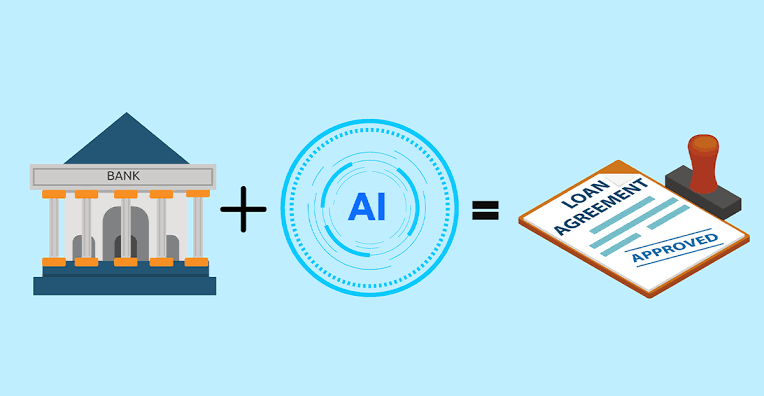
A decade ago, getting a personal loan approved meant a credit officer reviewing your file by hand, a process that often took over five days for a single application. Your eligibility rested almost entirely on one number: your CIBIL score. If it was high, you were in. If it was low or absent, you were out, regardless of what your actual financial behaviour looked like.
That model is being dismantled. Artificial intelligence has moved to the centre of how lenders assess personal loan eligibility, and the shift is profound. AI systems now read your bank statements, transaction patterns, and dozens of other signals in real time, producing a credit decision in minutes rather than days. For borrowers, this means faster approvals, fairer assessment for those with thin credit files, and personalised loan terms, but it also raises new questions about data and fairness. Here is how AI is reshaping the entire process.
From One Number to a Full Financial Picture
The most fundamental change AI brings is breaking the monopoly of the CIBIL score. Traditional underwriting relied on credit bureau data alone, your past loans, repayment history, and existing debt. If you had no borrowing history, the system had nothing to score, and it rejected you by default.
AI-based credit assessment evaluates borrowers using machine learning models that analyse far more than bureau data. These systems build a holistic credit profile from your digital footprint: transaction patterns, income regularity, spending behaviour, and cash flow stability. The result is a picture of your creditworthiness that a single three-digit score could never capture. A borrower with no formal credit history but a steady salary, disciplined spending, and consistent bank balances can now be assessed accurately, something the old model simply could not do.
The Alternative Data Signals AI Uses
AI models draw on a wide range of data points that traditional scoring ignored entirely. These “alternative data” signals are especially powerful for new-to-credit borrowers who lack a bureau history. The most significant ones include:
- Bank statement analysis: AI reads 6 to 12 months of transactions to assess salary regularity, average balance, existing obligations, and whether the account frequently runs dry before month-end.
- UPI transaction behaviour: The frequency, consistency, and pattern of digital payments signal financial activity and stability.
- Account Aggregator data: The RBI-regulated framework lets AI pull verified bank data directly during the application, in real time and with consent, now a primary underwriting input for new-to-credit borrowers.
- GST filing regularity: For self-employed applicants, consistent GST returns serve as third-party-verified income evidence.
- NACH mandate performance: How reliably your past auto-debits have cleared indicates repayment discipline.
According to World Bank research, combining traditional bureau data with alternative data improves predictive accuracy by up to 25% for thin-file borrowers. That improvement translates directly into approvals for creditworthy people the old system would have turned away.
Speed: From Days to Minutes
The second major change is speed. Manual underwriting was slow because a human had to review documents, verify income, check bureau data, and apply the lender’s policy rules step by step. AI collapses all of this into a near-instant, automated sequence.
Modern AI-driven underwriting runs multiple processes in parallel: one validates documents, another analyses bank statements, another checks bureau data, and a policy engine applies the lender’s rules against the AI-generated risk score. For small-ticket personal loans and pre-approved credit lines, this produces a fully automated decision in minutes. This is why a personal loan app can now approve and disburse funds within 24 hours, or even 30 minutes for eligible pre-approved customers, timelines that were impossible under manual review.
The scale of this shift is visible in the numbers: fintech NBFCs alone sanctioned a record 10.9 crore personal loans worth over Rs. 1 lakh crore in FY 2024-25, a volume that would be unmanageable without AI-driven automation.
Personalised Loan Terms
AI does not just decide yes or no; it shapes the specific terms you are offered. Instead of slotting every approved borrower into a few broad rate bands, AI models price each loan to the individual’s assessed risk. A borrower who demonstrates strong repayment capacity and stable finances may receive a lower interest rate and a higher eligible amount, while a higher-risk profile is offered terms that reflect that risk.
This is why two applicants with the same CIBIL score can receive different offers, the AI has read the finer detail of their financial behaviour and priced accordingly. For borrowers, it means the terms you are offered increasingly reflect your actual financial conduct, not just a broad category you happen to fall into. On a Bajaj Finserv personal loan, for instance, the rate ranges from 10% to 30% p.a., and where you land within that band is determined by this kind of granular, profile-based assessment.
What This Means for Different Borrowers
The AI shift affects different borrower profiles in distinct ways.
New-to-credit borrowers benefit the most. Where the old system rejected them outright for having no CIBIL score, AI can assess them through bank statements, UPI activity, and income patterns. First-time borrowers, young professionals, and those returning to formal credit now have a genuine path to approval.
Self-employed and gig workers gain from alternative data. Without a salary slip, they were hard to assess under traditional models. AI reads their GST filings, business account cash flows, and transaction consistency to build a credible profile.
Salaried professionals with clean profiles benefit from speed and better terms. AI recognises their stability quickly and can offer competitive rates and instant approval, often through pre-approved offers.
Borrowers with weak profiles face more accurate, and sometimes stricter, assessment. AI is better at spotting genuine risk, so a profile that might have slipped through manual review could now be flagged. This protects both the borrower from over-borrowing and the lender from bad loans.
The Guardrails: Regulation and Fairness
AI in lending is not unregulated. The RBI has been proactive in setting boundaries, recognising that automated decisions carry risks, from biased lending models to opaque “black box” decisions that borrowers cannot understand or challenge.
The RBI’s FREE-AI Committee has recommended that lender boards approve AI policies, establish governance structures, and set up committees to monitor emerging risks such as algorithmic bias and systemic weakness from multiple institutions relying on similar models. Alongside this, the Digital Personal Data Protection Act, 2023 governs how borrower data is collected, used, and stored, including the alternative data that AI models depend on. These frameworks aim to keep AI-driven lending accurate and fast while protecting borrowers from unfair or unexplained decisions.
For borrowers, the practical takeaway is that a regulated lender’s AI operates within these guardrails. This is another reason to verify that any personal loan app you use is listed on the RBI’s Digital Lending Apps directory and operated by a regulated entity, regulation is what ensures the AI assessing you is accountable.
How to Position Yourself for AI-Driven Assessment
Since AI reads your financial behaviour in detail, you can actively strengthen the profile it assesses. The steps that help:
- Keep your primary bank account clean. Maintain a steady balance, avoid frequent dips to zero, and prevent bounced transactions, AI reads all of this.
- Consolidate income into one account. Scattered income across multiple accounts is harder for AI to assess than a single account showing consistent inflows.
- Use the Account Aggregator option when applying. It gives the AI verified, real-time data, which is assessed more favourably than manually uploaded PDFs.
- Maintain UPI and digital payment consistency. Regular, disciplined digital activity contributes positively to your assessed profile.
- File your ITR and GST returns on time if self-employed. These are strong verified signals for AI models.
When you apply through the Bajaj Finserv personal loan app, checking your pre-approved offer with just a mobile number and OTP lets the AI assess your existing relationship data without a hard inquiry, often the fastest route to a personalised offer.
The Bottom Line
AI has transformed personal loan eligibility from a rigid, score-dependent gate into a nuanced, real-time assessment of your actual financial behaviour. It approves borrowers the old system ignored, delivers decisions in minutes instead of days, and prices loans to individual risk rather than broad categories. For the millions of Indians with thin or no credit files, this is a genuine expansion of access.
The technology rewards financial discipline that traditional scoring missed: steady income, clean accounts, consistent digital activity. To benefit, keep your financial behaviour clean and verifiable, use Account Aggregator when applying, and apply through a regulated personal loan app like Bajaj Finserv that operates its AI within the RBI’s guardrails. The lender’s assessment is increasingly a mirror of your real financial conduct, so the best way to earn good terms is to maintain conduct worth reflecting.