Introduction: What Is Geospatial Technology
In recent times’ virtual globe, facts aren’t really numbers—they have an area. Whether you’re checking tips on Google Maps, monitoring food delivery, monitoring climate patterns, or making plans in a smart town, geospatial era performs a vital function behind the curtain. It connects information with what is geospatial technology, making it less difficult to understand styles, relationships, and trends at some point on the Earth’s floor.
So, what is geospatial technology? In easy phrases, it refers to a generation used to accumulate, observe, and visualize facts associated with geographic places. This consists of equipment like Geographic Information Systems (GIS), satellite TV for computer imagery, GPS systems, and a long-flung sensing era.
This article gives a complete, in-depth rationalization of geospatial generation, along with its components, strolling technique, gear, real-world packages, benefits, annoying situations, and destiny scope.
What Is Geospatial Technology? (Definition)
Geospatial generation is a fixed set of tools and strategies used to gather, maintain, technique, and take a look at statistics associated with geographic locations on Earth.
It allows solutions to important questions like
- Where is some element placed?
- What goes on at a selected vicinity?
- How are awesome places related?
- What styles exist all through regions?
In easy terms:
Geospatial era = Location-based totally records + Analysis + Visualization
It combines spatial information (area) with descriptive records (attributes) to create significant insights.
Key Components of Geospatial Technology
The geospatial era is made from numerous critical components that work collectively to provide correct geographic insights.
1. Geographic Information System (GIS)
A Geographic Information System (GIS) is a software application used to keep, examine, and visualize spatial information.
Functions of GIS:
- Mapping information
- Analyzing styles
- Layering a couple of datasets
- Decision-making manual
Examples:
- ArcGIS
- QGIS
2. Global Positioning System (GPS)
The Global Positioning System (GPS) uses satellites to decide the proper vicinity of items on Earth.
Uses:
- Navigation (automobiles, airplanes, ships)
- Location monitoring
- Surveying and mapping
3. Remote Sensing
Remote sensing consists of collecting records about Earth from a distance, using satellites or drones.
Organizations like NASA use far-flung sensing to expose the following:
- Weather styles
- Climate change
- Forest cowl
- Ocean hobby
4. Spatial Data
Spatial information is the spine of the geospatial era.
Two kinds:
- Vector Data: Points, strains, polygons (e.g., roads, homes)
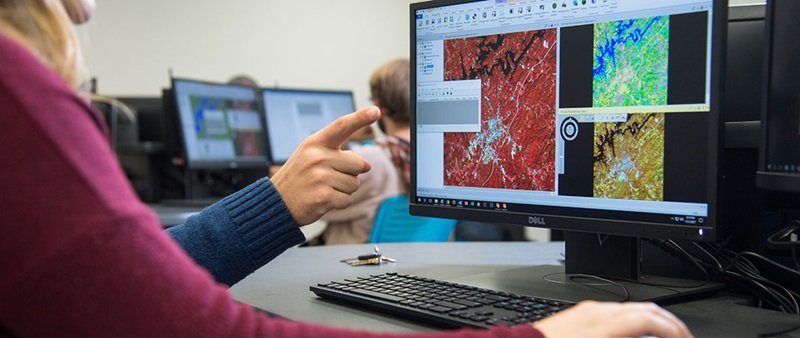
- Raster Data: Images (e.g., satellite tv for pc imagery)
5. Cartography
Cartography is the technology of making maps. Modern cartography makes use of digital equipment to create interactive and dynamic maps.
How Geospatial Technology Works
Understanding how geospatial generation works consists of several steps:
Step 1: Data Collection
Data is gathered via:
- Satellites
- GPS gadgets
- Drones
- Surveys
Step 2: Data Storage
The amassed data is saved in databases for easy get proper of access to and processing.
Step 3: Data Processing
Raw facts are wiped smooth, organized, and established.
Step 4: Data Analysis
Using a GIS system, data is analyzed to find out patterns and relationships.
Step 5: Visualization
Results are displayed as:
- Maps
- Graphs
- three-d models
Types of Geospatial Data
| Type of Data | Description | Example |
|---|---|---|
| Vector Data | Represents features using points, lines, polygons | Roads, rivers |
| Raster Data | Pixel-based images | Satellite images |
| Attribute Data | Descriptive information | Population data |
| Real-Time Data | Live location data | Traffic updates |
Applications of Geospatial Technology
Geospatial generation is carried out in nearly every industry these days.
1. Urban Planning and Smart Cities
City planners use geospatial records to:
- Design infrastructure
- Manage internet site visitors
- Plan housing duties
2. Agriculture
Farmers use geospatial tools for:
- Crop tracking
- Soil evaluation
- Precision farming
Benefits:
- Increased yield
- Efficient water utilization
3. Disaster Management
Geospatial generation enables anticipating and manipulating disasters, which incorporates the following:
- Floods
- Earthquakes
- Cyclones
Authorities can:
- Track affected regions
- Plan rescue operations
4. Transportation and Navigation
Apps like Google Maps use geospatial data to offer:
- Real-time guidelines
- Traffic updates
- Route optimization
5. Environmental Monitoring
Used to tune:
- Climate change
- Deforestation
- Pollution ranges
6. Defense and Security
Military companies use geospatial statistics for the following:
- Surveillance
- Mission making plans
- Border tracking
7. Healthcare
Geospatial equipment helps in:
- Disease monitoring
- Pandemic assessment
- Healthcare making plans
8. Business and Marketing
Companies use region-primarily based true statistics for:
- Market analysis
- Customer targeting
- Site selection
Tools and Software in Geospatial Technology
Here is a desk of famous tools:
| Tool/Software | Purpose | Used By |
|---|---|---|
| ArcGIS | Advanced mapping and analysis | Professionals |
| QGIS | Open-source GIS tool | Students & researchers |
| Google Earth | Visualization of Earth | General users |
| ERDAS Imagine | Remote sensing analysis | Scientists |
| MapInfo | Business mapping | Enterprises |
Advantages of Geospatial Technology
1. Better Decision Making
Provides correct insights for making plans and managing.
2. Time Efficiency
Automates information evaluation and mapping methods.
3. Cost Reduction
Optimizes sources and reduces wastage.
4. Real-Time Data Access
Helps in short responses to situations.
5. Improved Accuracy
Reduces human mistakes in mapping and evaluation.
Disadvantages of Geospatial Technology
1. High Cost
Advanced gear and systems can be highly priced.
2. Data Privacy Concerns
Location tracking can improve privateness problems.
3. Technical Complexity
Requires expert specialists.
4. Data Accuracy Issues
Incorrect information can lead to wrong picks.
Importance of Geospatial Technology in Modern World
Geospatial technology has come to be important due to the following fact:
- It supports smart metropolis development
- Helps in weather trade evaluation
- Enables inexperienced transportation systems
- Improves disaster preparedness
It plays a vital role in building a records-pushed society.
Future of Geospatial Technology
The future of geospatial technology might be very promising and rapidly evolving.
1. Integration with Artificial Intelligence (AI)
AI will beautify records, assessment, and prediction.
2. Use of Drones
Drones will beautify the information series’ pace and accuracy.
3. 3-D Mapping and Digital Twins
Cities are probably recreated in virtual shape for better planning.
4. Real-Time Data Processing
Faster insights with IoT integration.
5. Space-Based Technologies
More satellites will enhance worldwide insurance.
Geospatial Technology in India
India is unexpectedly adopting the geospatial era in diverse sectors.
Government obligations:
- Digital India
- Smart Cities Mission
- ISRO satellite tv for pc television for computer programs
The Indian Space Research Organisation plays a top role in:
- Satellite development
- Remote sensing
- Space-primarily based mapping
Career Opportunities in Geospatial Technology
This subject offers a massive shape of career alternatives:
| Job Role | Description |
|---|---|
| GIS Analyst | Works with spatial data |
| Remote Sensing Specialist | Analyzes satellite data |
| Cartographer | Creates maps |
| Geospatial Developer | Builds GIS applications |
| Surveyor | Collects geographic data |
Skills Required
To construct a career in geospatial technology, you want the following:
- GIS software program records
- Data evaluation capabilities
- Programming (Python, R)
- Mapping techniques
- Problem-fixing functionality
Conclusion
Geospatial generation is remodeling how we recognize and interact with the arena. From navigation apps to weather monitoring and smart towns, its programs are massive and constantly growing.
Understanding what geospatial generation is is not surely essential for experts; however, moreover, for all of us residing in a generation-driven world. It permits us to make better choices, decorate performance, and build a sustainable destiny.
As generations maintain to conform, geospatial systems become even extra powerful, making our international smarter, greater, steadier, and extra related.
FAQs
1. What is the geospatial era in easy terms?
Geospatial generation is the usage of machines to build up and have a look at facts associated with locations on Earth.
2. What are examples of the geospatial era?
Examples consist of GIS, GPS, satellite imagery, and mapping equipment like Google Maps.
3. What is GIS in the geospatial era?
GIS is a device used to analyze and visualize geographic records.
4. What is the use of the geospatial era?
It is carried out in navigation, agriculture, disaster management, urban planning, and further.
5. Is geospatial technology a tremendous profession?
Yes, it offers robust career increases and opportunities in a couple of industries.